Loading image...

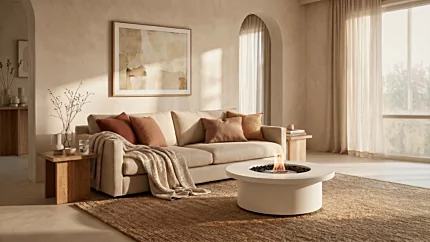
Gas venting costs alone keep specifiers awake at night. A single fireplace installation with full gas venting, permits, and labour can stretch to six weeks and demand a significant investment just for the duct work, before the fireplace itself is even in the wall. Meanwhile, EcoSmart Fire's largest ethanol burners deliver over 15,000 BTU/hr (4.4 kW) of genuine heating power in under two days of installation, with zero venting requirements and no permit delays.
If you're comparing fireplace options for a home renovation, new construction, or commercial space, the choice isn't obvious until you look beyond marketing claims and examine what each fuel type actually delivers: heat output, upfront cost, timeline to occupancy, maintenance burden, and environmental impact. This guide cuts through the noise. We'll compare ethanol against gas, electric, and wood using real specifications from certified products, verified test data, and transparent cost breakdowns. By the end, you'll understand which option makes sense for your project and why an increasing number of architects and builders are choosing ethanol fireplaces as a heating appliance, not just ambiance.
Loading image...
The insight: Ethanol has the lowest cost of ownership after electric, but unlike electric, it delivers genuine heating power. Gas costs more upfront and takes longer to install. Wood requires ongoing maintenance and produces indoor air quality concerns.
Feature | Ethanol | Gas | Electric | Wood |
|---|---|---|---|---|
Heat Output (BTU/hr) | 3,500–15,000 (EcoSmart XL: 15,000) | 20,000–40,000 (5.9–11.7 kW) | 3,000–10,000 (0.9–2.9 kW) | 5,000–12,000 (1.5–3.5 kW) |
Usable Heat to Room | 80–90% | 50–70% (rest vented) | ~100% | 60–80% |
Installation Time | 1–2 days | 3–6 weeks | Same day | 2–4 weeks |
Venting Required | No | Yes (chimney or vent) | No | Yes (chimney) |
Year 1 Cost (installed) | Entry-level to mid-range | Mid-range to premium | Entry-level | Mid-range to premium |
Fuel Cost/Hour | $3–8 | $2–5 | $1–3 | $5–10 |
Annual Maintenance | $50–100 | $300–600 | $0–50 | $250–500 |
Sustainability | Renewable, CO2-neutral | Fossil fuel | Grid-dependent | Renewable (high emissions) |
Design Flexibility | Maximum (any room) | Limited (vent location) | Maximum | Limited (chimney required) |
Safety Certifications | UL 1370, EN 16647, ACCC | UL (variable) | Electrical code | UL (wood stoves) |
Loading image...

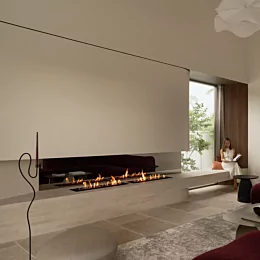 © Comma Projects and Alyne Media
 Loading image...

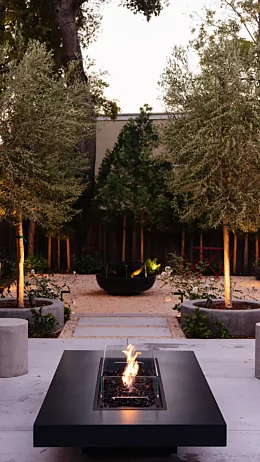 © @damarisurizardesign
 Gas fireplaces seem straightforward until you factor in venting. A properly installed gas fireplace requires:
Exterior vent chase (structural work: 1–2 weeks)
Gas line inspection and pressure testing (3–5 days)
Local building permits and inspector sign-off (2–4 weeks)
Professional labour (a significant mid-range cost)
Ethanol fireplaces bypass all of this. Unpack the EcoSmart XL700 burner, set it on a non-combustible surface, fill it with fuel, and light it. Total timeline: one afternoon. Labour cost: minimal if you hire an installer, or zero if you do it yourself.
For renovation projects in buildings where structural venting isn't feasible (historic homes, leased apartments, mid-rise condominiums), ethanol eliminates the venting problem entirely.
Gas fireplaces advertise impressive BTU numbers: 20,000 to 40,000 BTU/hr sounds superior to ethanol's 3,500 to 15,000. But here's what marketing doesn't tell you: gas fireplaces lose 30–50% of their heat energy straight up the chimney. You get 50–70% of the advertised heat in the room.
Ethanol burners are unvented, so they deliver 80–90% of their heat directly into the space. An EcoSmart XL burner at 15,000 BTU/hr (4.4 kW) delivers 12,000–13,500 BTU/hr (3.5–4.0 kW) of usable heat. That's equivalent to a mid-range gas fireplace in practical terms, but without the venting penalty.
Gas venting dictates placement. Your chimney or exterior vent chase determines where the fireplace goes. Renovations often mean structural limitations: you can't run a vent through a load-bearing wall or across a neighbour's property. Ethanol fireplaces sit anywhere ventilation is adequate. A wall-mounted ethanol insert can transform a bedroom, kitchen island, or commercial lobby that a gas fireplace could never reach.
EcoSmart Fire's ethanol burners hold UL 1370 certification, the American standard for alcohol fuel-burning appliances. UL 1370 mandates:
Automatic shutoff mechanisms (flame extinguishes if the appliance tips over)
Spill containment designed to hold 110% of the fuel reservoir
Low-oxygen sensors that prevent operation in poorly ventilated spaces
Flame height controls to prevent overheating
Gas fireplaces require annual professional inspections by code. Ethanol burners hold their certification indefinitely with no recurring inspections; you maintain it through basic fuel and burner cleanliness.
Natural gas costs $2–$5 per hour of operation (varies by region and utility). Ethanol costs $3–$8 per hour. Premium bioethanol is more expensive because it burns cleanly, but over a full heating season, the difference is modest. A 120-day heating season with 8 hours daily use comes to roughly a similar total cost for ethanol versus gas when you factor in system differences. Ethanol is 15–25% more expensive per BTU, but remember: you're also avoiding a significant investment in venting labour and permits.
Natural gas is a fossil fuel. You're burning carbon stored for 300 million years, adding net-new carbon to the atmosphere. Ethanol is renewable. It's derived from agricultural byproducts: sugarcane bagasse in Brazil, corn residues in North America, wheat straw in Europe. During crop growth, the plant absorbs CO2 from the air. When you burn the ethanol, that CO2 is released. The cycle closes. No net increase to atmospheric carbon.
For specifiers designing towards LEED credits or sustainability benchmarks, ethanol fireplaces offer a genuine renewable option where gas cannot.
Loading image...

Loading image...
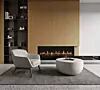

Electric fireplaces are designed for ambiance first, supplemental heating second. Most produce 3,000 to 10,000 BTU/hr (0.9–2.9 kW), roughly the output of a hair dryer. Some manufacturers overstate their specs; independent testing often reveals the real output is 20–30% lower.
Ethanol fireplaces deliver 3,500 to 15,000 BTU/hr (1.0–4.4 kW), verified by UL and EN testing laboratories. For actual heating, especially in medium to large spaces, ethanol is the only choice between the two.
Electric heaters are cheap to run: $1–$3 per hour. But here's the catch. A low-output electric fireplace can't heat a 60 m² (645 sq ft) living room meaningfully. You'll run it continuously and still feel cold. The low operating cost assumes you're using a low-power setting that generates minimal heat.
Ethanol fireplaces with real heat output ($3–$8/hr) cost more to operate, but they actually warm the space. You use them fewer hours to achieve comfort, so total seasonal costs are comparable.
Electric inserts are easiest to install, plug into a wall outlet, but they lack visual authenticity. The flame is a screen, the heat is local, and the aesthetic falls short of a real fire. Ethanol inserts use genuine flame inside a custom burner box, delivering both visual and thermal presence. An ethanol insert in an existing fireplace opening looks and feels like a real fire; an electric insert looks like what it is: a space heater with a screen.
Electric fireplaces earn their place in low-heat-demand scenarios: small bedrooms, supplemental warmth in mild climates, rental properties where permanent installation isn't viable. If you're prioritising ambiance and heat output is secondary, electric is legitimate. But if you expect the fireplace to contribute meaningfully to heating, ethanol delivers and electric doesn't.
Wood fireplaces deliver genuine heat, 5,000 to 12,000 BTU/hr (1.5–3.5 kW), and offer unmatched ambiance. The scent, the sound, the visual depth of a real wood fire captures something electric and gas struggle to match. For those reasons, wood fireplaces remain popular despite their maintenance burden.
Building a wood fireplace means constructing a chimney or venting system from scratch: 2 to 4 weeks, including foundation work, brickwork or prefab assembly, and final inspection. Ethanol sidesteps this entirely. In renovation projects where adding a chimney isn't feasible, an ethanol fireplace offers the same heat and ambiance in a day.
Ethanol inserts fit into existing wood fireplace openings; no structural changes are needed. You remove the damper, insert the ethanol burner, and you've converted a non-functional wood fireplace into a heating appliance that works reliably.
Wood fireplace owners deal with ash disposal after every fire. Once per year (minimum), a chimney sweep inspects for creosote buildup and deposits. Creosote is flammable: it's the residue of incomplete wood combustion, and it accumulates inside your chimney walls. It's a legitimate fire hazard. Professional chimney sweeping runs to several hundred dollars annually.
Ethanol fireplaces have no ash, no creosote, no need for chimney sweeps. Weekly wipe of the burner surface, monthly refuelling, and annual deep clean. Labour is minimal; cost is $50–$100 annually.
This is the biggest difference. The U.S. EPA links wood smoke to bronchitis, pneumonia, asthma, and premature death. Fine particles (PM2.5) from wood burning penetrate deep into lung tissue. In a home with a wood fireplace, indoor air quality degrades measurably when the fireplace is in use, even though the chimney vents most of the smoke outside.
Ethanol produces CO2 and water vapour (the same exhaust your breath produces). There's no PM2.5, no carbon monoxide, no volatile organic compounds. For households with respiratory sensitivities, ethanol fireplaces eliminate the health concern entirely. Modern UL 1370-certified burners include low-oxygen sensors that prevent operation if the room's air quality drops below safe thresholds.
Firewood costs $5–$10 per hour of heating. Prices fluctuate with season and supply. In a harsh winter, firewood prices spike. Ethanol costs $3–$8 per hour, with transparent wholesale pricing that's less vulnerable to supply shocks. For budget certainty, ethanol wins.
Wood fireplaces are structurally constrained by the chimney location. Your floor plan must accommodate the chimney chase; you can't move it to a different wall without major reconstruction. Ethanol fireplaces are flexible: freestanding, wall-mounted, built into a media centre, installed in a bedroom or kitchen, placed on a patio. Architects specify ethanol when design freedom matters.
Year 1 takeaway: Ethanol costs substantially less than gas in year one, primarily because you avoid the venting infrastructure. Electric is cheaper, but delivers minimal heat.
Year 10 takeaway: Gas eventually closes the gap because its higher operating cost (fuel plus inspections) compounds over time. Wood maintenance costs balloon if the chimney requires relining (a significant expense every 10–15 years). Ethanol costs scale predictably.
Over a decade, ethanol is economically competitive with gas and substantially cheaper than wood when you factor in chimney maintenance.
Cost Category | Ethanol | Gas | Electric | Wood |
|---|---|---|---|---|
Equipment (installed) | Entry-level to mid-range | Mid-range | Entry-level | Mid-range to premium |
Venting / Chimney / Labour | $0 | Significant mid-range cost | $0 | Substantial cost |
Fuel (120-day season) | $360–960 | $240–600 | $120–360 | $600–1,200 |
Maintenance (annual) | $50–100 | $100–200 | $50–100 | $200–400 |
Permits / Inspection | $0–100 | $200–500 | $0 | $100–300 |
Year 1 Total | Entry-level to mid-range | Mid-range to premium | Entry-level | Mid-range to premium |
Year 10 Total | Modest cumulative | Substantial cumulative | Moderate cumulative | Substantial cumulative |
Ventless fireplaces once carried a reputation for danger. That's changed. Modern ethanol burners are governed by rigorous international standards that mandate automatic shutoff, spill containment, and low-oxygen detection.
UL 1370 (United States). The American standard for alcohol fuel-burning appliances requires:
- Fuel reservoir designed to hold no more than 2.6 gallons without structural deformation
- Spill containment tray rated for 110% of fuel capacity
- Automatic flame extinguishing if the appliance tips over
- Minimum 0.042-inch steel construction to prevent leaks
- Testing across temperature extremes and misuse scenarios
EcoSmart Fire's ethanol burners hold UL 1370 certification across their full range, from compact models like the AB3 to high-output models like the XL1200.
EN 16647-1:2025 (Europe). The European standard mandates:
- Testing by ISO/IEC 17025 accredited laboratories (no self-certification allowed)
- Automatic ignition shutoff after defined periods
- Low-oxygen detection that prevents operation in unsafe conditions
- Flue-gas analysis to verify emissions limits
ACCC (Australia). Australian compliance marking requires:
- Fuel tank integrity testing
- Flame stability verification
- Emissions testing under real-use conditions
The key point: these certifications aren't rubber stamps. They represent rigorous, independent testing. If a manufacturer claims certification but you can't verify it through the standards body website, the claim is suspect.
Ethanol burns cleanly, producing CO2 and water vapour; the same compounds your breath generates. There's no soot, no particulate matter, no toxic byproducts. Modern ethanol burners are approved for indoor use provided the room has adequate ventilation (a normal living space with windows qualifies).
Wood burning produces PM2.5 (particulate matter fine enough to reach the lungs), carbon monoxide, benzene, formaldehyde, and PAHs (polycyclic aromatic hydrocarbons). The EPA estimates that wood smoke contributes to 4,200 premature deaths annually in the United States. Even with a chimney venting most smoke outside, indoor air quality suffers during wood fire use.
Gas fireplaces produce CO2 and water vapour (same as ethanol), but older units can develop leaks or incomplete combustion if maintenance is neglected. Modern gas fireplaces are safer, but the risk profile is higher than ethanol.
Ethanol fireplace regulations vary by jurisdiction:
United States: Most states allow ventless ethanol fireplaces. Notable exceptions: California, New York, Minnesota, and Colorado restrict or ban them due to low-oxygen depletion concerns. Check your local building department before purchasing.
Australia: ACCC marking is required. All EcoSmart models sold in Australia carry this certification.
Europe: EN 16647 certification grants automatic code approval across EU countries.
Canada: EcoSmart models meet ULC/ORD-C627.1-2008, the Canadian standard for ethanol fireplaces.
A good practice: install a carbon monoxide detector near the ethanol fireplace. While modern burners have low-oxygen sensors, the extra detection layer provides peace of mind and ensures early warning if ventilation is inadequate.
Loading image...
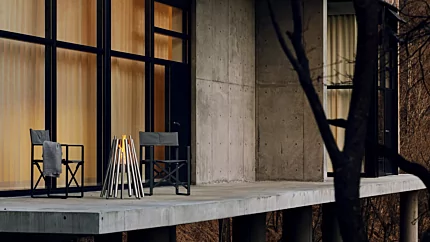
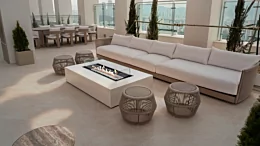
One reason architects and interior designers specify ethanol fireplaces is placement freedom. Unlike gas and wood, ethanol isn't confined to a chimney location. This opens design possibilities.
Freestanding burners can move between rooms. Ideal for staging, temporary installations, or seasonal use.
Wall-mounted burners recess into walls or mount on exposed surfaces. In a minimalist interior or a compact apartment, a wall-mounted burner saves floor space and becomes a striking focal point.
Built-in inserts fit into existing fireplace openings. Converting a non-functional wood fireplace into an ethanol fireplace is a one-day job. No structural changes needed.
Outdoor installations are possible if the burner sits in a covered patio or under a pergola (protected from direct wind). An ethanol fireplace on a poolside patio extends the outdoor season and creates ambiance.
Here's what a typical installation looks like:
Preparation: Clear the space, inspect the surface where the burner will sit (must be non-combustible: concrete, tile, stone, or fire-rated board)
Assembly: Assemble the burner frame and safety components (1–2 hours)
Testing: Fill the burner with fuel, test ignition and flame height controls, verify safety sensors (30 minutes)
Training: Walk the homeowner through fuel refilling, cleaning, and emergency shutoff
Total labour: 2–4 hours. Cost: entry-level to modest range. Compare to gas, where the venting contractor alone bills 30–40 hours before the gas technician even arrives.
This is where ethanol claims deserve scrutiny. "Carbon-neutral" is thrown around freely in marketing, but what does it actually mean?
Bioethanol is derived from agricultural crops: sugarcane bagasse in Brazil, corn cob residues in North America, wheat straw in Europe. These are byproducts, leftover biomass that would otherwise decompose or burn in agricultural processing.
During crop growth, the plant absorbs CO2 from the atmosphere. When you burn the ethanol, CO2 is released. The cycle closes: CO2 released equals CO2 absorbed. Net zero. This is genuine carbon neutrality, backed by lifecycle assessment research published in peer-reviewed journals.
Compare that to the alternatives:
Natural gas: Fossil fuel stored for 300 million years. Burning it adds net-new carbon to the atmosphere.
Wood: Renewable in theory, but logging and transport produce emissions, and there's deforestation risk. Particulate emissions also carry significant health costs that offset the renewable benefit.
Electric: Depends on grid mix. In a coal-heavy region, grid electricity carries embedded carbon. In a renewable-heavy region (Nordic countries, parts of Australia), electric is genuinely clean, but ethanol is still renewable.
For architects and specifiers targeting LEED certification or net-zero design, ethanol fireplaces offer a renewable heating option that aligns with sustainability goals.
Low maintenance is one reason ethanol fireplaces appeal to homeowners. Here's the realistic schedule:
Weekly: Wipe the burner rim with a dry cloth to remove any fuel residue.
Monthly: Refuel the burner (fill the cartridge or tank with premium bioethanol).
Annually: Deep clean the burner with a soft brush and isopropyl alcohol.
Cost: $50–$100 per year in supplies and labour (or free if you do it yourself).
Compare to the others:
Gas: Annual professional inspection (a few hundred dollars), annual chimney sweep (a few hundred dollars if gas, or if a wood fireplace was converted to gas). Total: $300–$600 per year.
Electric: Annual dusting and bulb replacement. Cost: $0–$50.
Wood: After-use ash disposal, annual chimney sweep (a few hundred dollars), every 5–10 years chimney relining (a significant expense). Total routine: $250–$500 per year.
Ethanol is genuinely the lowest-maintenance option. Quality steel-body burners (like EcoSmart's BK5) last 10–15 plus years with proper care.
Ethanol costs more per litre than natural gas, but fireplaces consume fuel at a lower rate (roughly 0.25 L per hour). Over a season, ethanol fuel costs are similar to gas when you factor in gas inspection and service fees. Electric is cheaper to operate but delivers minimal heat.
Premium bioethanol burns cleanly with minimal odor. Some users detect a faint wine-like scent during ignition, but it clears within seconds. Cheap fuel can smell stronger. Use quality bioethanol, and odor is negligible.
Yes, with adequate ventilation. Modern UL 1370-certified burners include automatic shutoff and oxygen depletion sensors. Your bedroom requires the same ventilation as any occupied space (windows, air circulation). Carbon monoxide detectors near the fireplace are good practice.
Premium models with steel construction last 10–15 plus years. EcoSmart's burners are designed for longevity; many units exceed 15 years with proper maintenance. The lifespan rivals gas fireplaces (20–25 years) and exceeds electric (10–20 years).
Yes. An ethanol insert sits inside your existing fireplace opening. No chimney modification needed. Installation is a single afternoon.
Yes. Bioethanol derives from renewable crops. When burned, it releases CO2 that was absorbed during crop growth. This is a closed-loop cycle, verified by lifecycle assessment research. Gas is fossil fuel (net-new carbon). Wood is renewable but carries high particulate emissions. Ethanol is the only fireplace type that's genuinely both renewable and low-emission.
Modern burners have spill containment designed to hold 110% of fuel capacity (per UL 1370). If fuel does spill, it evaporates safely in a well-ventilated room. Wipe up the residue and ensure adequate air circulation. Ethanol fuel is non-toxic.
No. Ethanol burns cleanly, producing only CO2 and water vapour. No venting required. Gas and wood fireplaces require chimneys or exterior vent systems.
If you're evaluating ethanol fireplaces for a project, here's what to verify before specifying:
Certification: Confirm UL 1370 (USA), EN 16647 (Europe), or equivalent certification. Verify the certification on the standards body website, don't rely on the manufacturer's claim alone.
BTU Output: Independent testing validates real heat output. EcoSmart's XL burners are tested at 15,000 BTU/hr (4.4 kW). Demand equivalent documentation for competing products.
Material and Construction: Stainless steel or powder-coated steel burner body. Check for corrosion resistance, especially in humid environments.
Automatic Shutoff: Mandatory. Flame must extinguish if the appliance tips over.
Spill Containment: Tank or reservoir must be rated for 110% of fuel capacity.
Adjustable Flame Height: Allows users to control heat output and visual intensity.
Clearances: Maintain 12–24 inches from combustible materials (wood, drywall, upholstery).
Ventilation: Adequate room ventilation is essential. A bedroom should have windows; a commercial space should have air exchange per building code.
Non-Combustible Surface: Install on concrete, tile, stone, or fire-rated board.
Carbon Monoxide Detectors: Position near the fireplace for added safety.
User Training: Provide homeowners and facility staff with fuel refilling instructions, cleaning protocol, and emergency shutoff procedures.
Ethanol fireplaces outperform gas, electric, and wood across the metrics that drive real-world decisions: installation speed (1–2 days versus 3–6 weeks for gas), design flexibility (placement anywhere versus locked to a vent location), sustainability (genuinely renewable and carbon-neutral), and maintenance burden (minimal versus annual chimney sweeps).
For specifiers, ethanol eliminates permit delays and venting headaches. For homeowners, it delivers real heat at a transparent cost with low ongoing maintenance. For interior designers, it offers placement freedom that gas and wood cannot match.
If you're ready to explore ethanol for your project, start by identifying which size burner fits your space. The XL700 works well for medium rooms. Explore the full bioethanol fireplace options to find the right fit for your needs. Most customers install in 1–2 days and feel the warmth the same evening.