What are ventless fireplaces? The technology redefining interior design
Loading image...

A ventless fireplace is a heating appliance that burns fuel cleanly enough to exhaust combustion byproducts directly into the room, requiring no external flue, chimney, or venting system. This distinction separates ventless fireplaces from traditional wood-burning fireplaces, gas direct-vent systems, and electric simulations. But the category encompasses two very different technologies, gas ventless and bioethanol ventless, and the differences matter profoundly for specifiers.
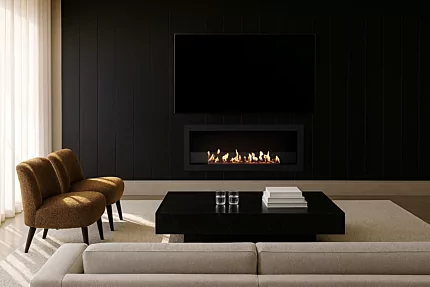
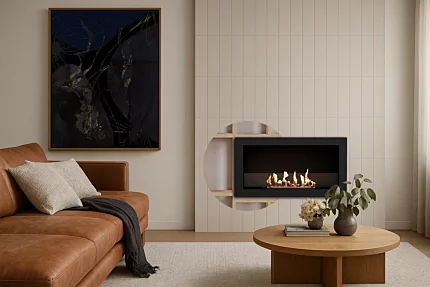
The emergence of ventless as a design category reflects broader shifts in how we think about interior spaces. Open-plan living requires focal points without visual clutter. Minimalism demands absence of infrastructure. Renovation work in historic buildings or high-rise apartments makes structural modifications prohibitive. Bioethanol ventless fireplaces answer these constraints directly: they deliver a real flame, measurable heat output, and the psychological warmth of fire, all without the ducting, venting infrastructure, or structural commitments that traditional fireplaces demand.
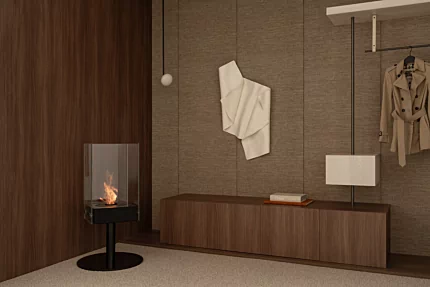
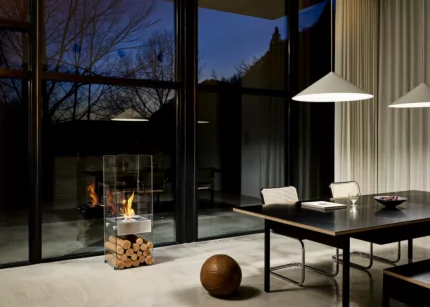
EcoSmart Fire’s Designer Fireplace range exemplifies this category. Freestanding bioethanol units like the Ghost and Orbit models integrate the AB3 burner, delivering clean combustion without compromising on aesthetic clarity. These aren’t compromise products masquerading as premium solutions; they’re designed from the ground up as fire objects, not as systems trying to solve a technical problem.
How gas ventless differs from bioethanol ventless
Gas ventless fireplaces and bioethanol ventless fireplaces sound equivalent but operate under completely different safety and regulatory frameworks. This distinction shapes what’s possible in a project.
Gas ventless fireplaces produce nitrogen dioxide and moisture alongside their heat. Because combustion consumes oxygen from the room, gas ventless systems are fitted with oxygen depletion sensors, safety mechanisms that shut down the fire if ambient O₂ levels drop below safe thresholds. This technological requirement creates spatial constraints: the system must monitor the room’s oxygen content continuously, which limits placement and requires strict room-volume compliance. In several North American jurisdictions, gas ventless fireplaces face regulatory restrictions or outright bans due to indoor air quality concerns.
Bioethanol ventless fireplaces produce only carbon dioxide and water vapour, the same combustion byproducts as a candle flame. There is no oxygen depletion risk, no sensor requirement, and no structural constraint created by combustion chemistry. The technology is certified to international safety standards (UL 1370-16 in North America, EN 16647 in Europe, ACCC in Australia), removing the regulatory uncertainty that surrounds gas ventless in some markets.
For specifiers, this means bioethanol ventless removes an entire category of project friction. You’re not coordinating with gas safety authorities, calculating oxygen reserves, or communicating sensor functionality to end users. You’re specifying a clean-burning appliance with international certification and global precedent.
Attribute | Gas Ventless | Bioethanol Ventless |
|---|---|---|
Combustion byproducts | Nitrogen dioxide, moisture, heat | Carbon dioxide, water vapour, heat |
Oxygen depletion risk | Yes, requires O₂ sensor | No, not applicable |
Room volume constraints | Strict (sensor-dependent) | Moderate (based on burner size) |
Regulatory status | Restricted in some jurisdictions | Widely permitted internationally |
Placement freedom | Limited by sensor and volume | Flexible (within burner-size guidelines) |
Certification | Regional, variable | UL 1370-16, EN 16647, ACCC |